

Everything that goes into construction—from materials to the energy used to raise buildings—adds up to an estimated 39% of global carbon emissions. Energy-intensive materials like cement and steel make up a decent chunk of that pie. Already, some in the industry are reducing their footprint by using recycled or otherwise more sustainable stock, like bamboo or cork. Some of these supplies are even carbon-negative, meaning they hold on to more than what they emit.
With these strategies and more, a few carbon-negative buildings have hit the skylines. Some, like the Powerhouse Telemark office in Norway, rely on renewable energy generation to secure that status, while others have earned it through materials, like the Serpentine Pavilion at London’s Kensington Gardens. Even so, not all stock billed as “carbon-negative” is truly green.
What types of materials are carbon-negative?
Bio-based construction materials, like those used in the Serpentine Pavilion, are often carbon-negative because, well, they’re plants. When a material like bamboo grows, it captures CO2 from the atmosphere, which remains stored even if the bamboo is chopped down and used in a building—and it stays there as long as the structure stands. (This is the same reason, for example, that you want to mulch, not burn, a real Christmas tree.)
Some plant-based construction materials can even be superior to conventional products. The startup company Plantd, for example, uses fast-growing perennial grass to create panels that are stronger and more moisture-resistant than wood panels, and can be used in wall sheathing, roof decking, and subflooring. Hempcrete is made from hemp and lime and can be stacked in boxes around a structural (usually timber) frame, providing superior thermal insulation and moisture resistance compared to conventional materials.
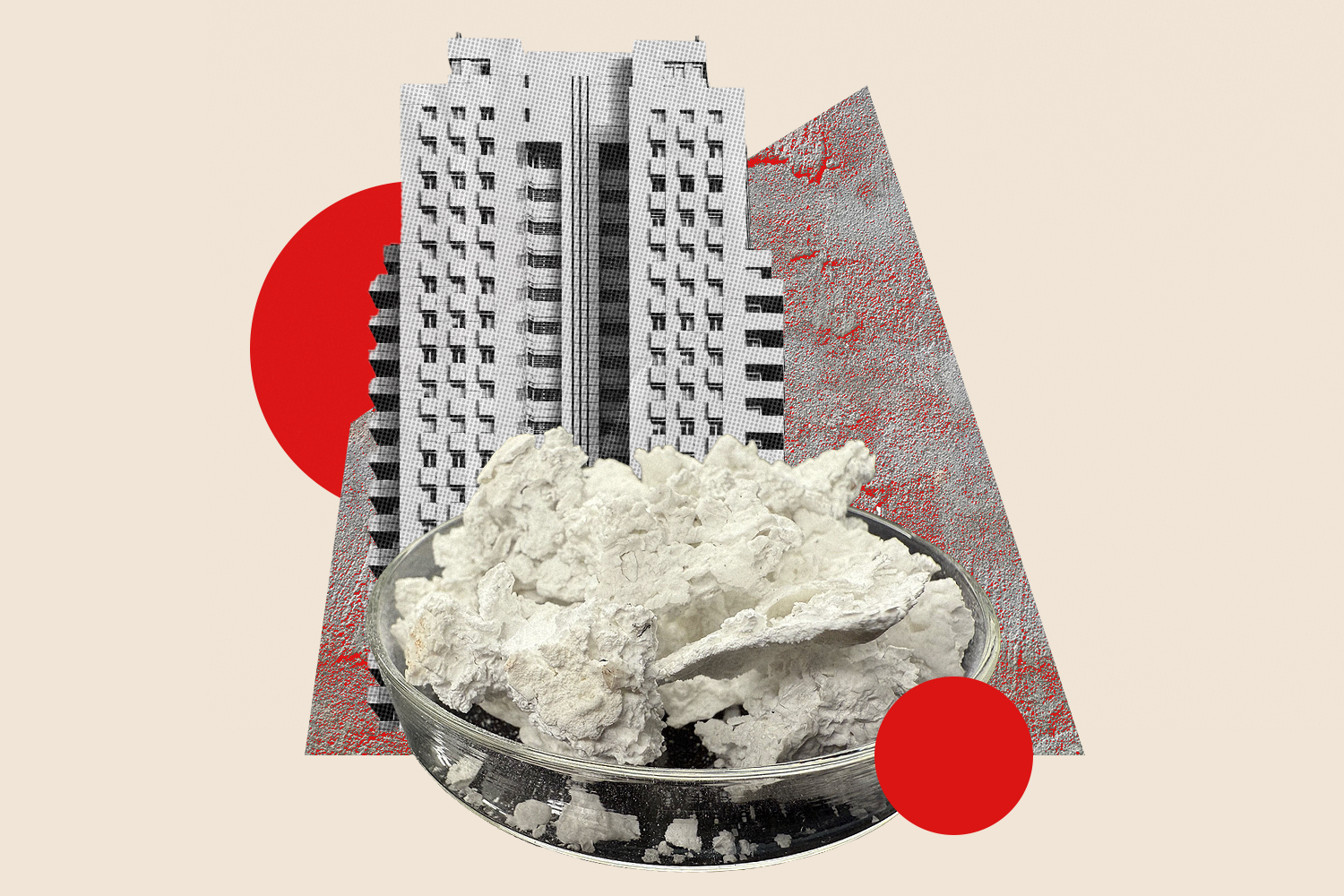
Carbon-negative materials don’t have to be bio-based, though. For example, researchers recently figured out a method to make concrete components that sequester significant CO2. The procedure, described in a paper published in Advanced Sustainable Systems, involves running a current through electrodes placed in seawater and then injecting carbon dioxide scrubbed from the air. Chemical reactions between the CO2, water, and natural dissolved minerals create solid minerals, including calcium carbonate (a carbon sink) and magnesium hydroxide (which further reacts with CO2 to sequester more carbon). These materials can hold more than half their weight in carbon.
The minerals can then be used as a substitute for sandlike aggregate that’s in heavy demand in construction, particularly for concrete and cement. By altering factors like voltage, the researchers can precisely control the properties of the minerals they make, allowing them to craft the ideal aggregate to be used in a range of materials.
Warning: Potential for greenwashing ahead
Not all products branded as carbon-negative are truly green. Timber is perhaps the worst offender. Sure, like all plant-based materials, wood stores carbon. But each tree would sequester more carbon if it were still in the ground—not to mention it would benefit the environment in other ways, like as habitat and food for critters. Companies like ThinkWood are pushing timber as a carbon-negative material, but research shows that so-called “mass timber” could emit even more carbon than steel or concrete. Other biomaterials don’t necessarily have the same problem, particularly when they grow a lot faster than trees.
Building new structures with carbon-negative materials—assuming they’re legit as opposed to greenwashing—is also no substitute for using what’s already standing. Retrofitting an existing structure rather than building anew comes out ahead in almost all instances, according to an analysis published in fall 2024. The emissions that went into getting existing steel or timber or concrete where it is, coupled with how much energy demolition and rebuilding takes, makes the math kinda easy.