
Plastic is everywhere, and that’s no secret. It’s in our packaging, furniture, and clothing, and tiny microplastic particles wind up in our blood and breast milk. Every piece of plastic that’s ever been made still exists—in one form or another. What’s worse: How we handle all that waste can create a whole new set of problems.
Plastic waste generally falls into two buckets: Let’s call them managed and unmanaged. When we think of unmanaged plastic waste, we often conjure images of bottle caps bobbing in the ocean or rafts of plastic bags floating through rivers, but that’s not the most accurate picture. New research published in the journal Nature delves into what really happens to plastic when there’s literally nobody there to collect it.
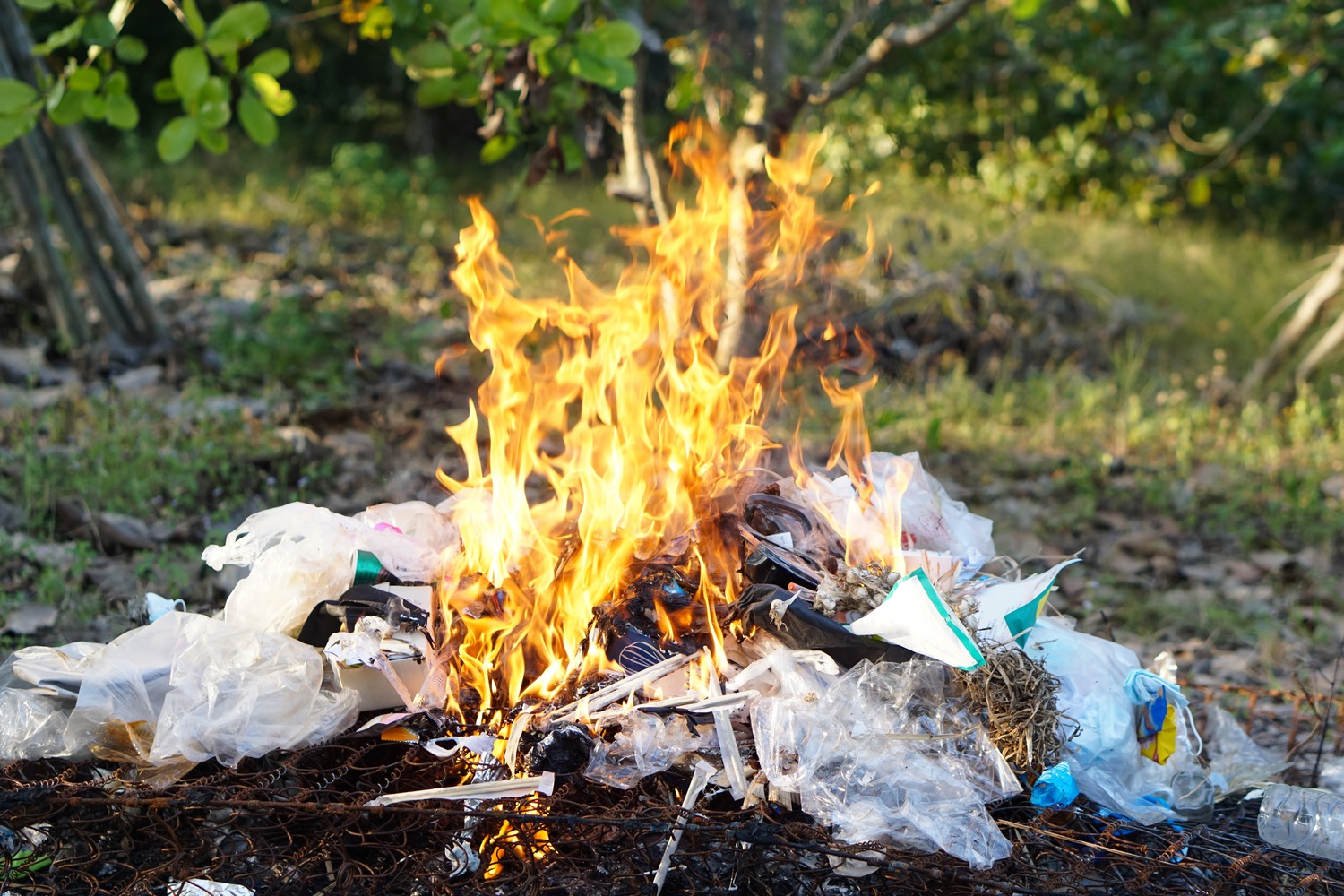
According to the analysis, 57% of the plastic waste that enters the environment isn’t littered or plopped into the ocean—it gets burned. This isn’t because of irresponsible behavior, says Ed Cook, study author and research fellow in circular economy systems for waste plastics at the University of Leeds, but from a lack of proper waste management systems. Some 1.2 billion people (around 15% of the global population) live day to day without access to collection services at all. “If somebody doesn’t collect the waste from your house, what would you do with it?” he says. “There are limited options.”
‘Good’ burning vs. bad burning
But before we get into how much of a problem unregulated plastic burning is, it’s essential to know that we incinerate garbage all the time. In the U.S., about 19% of our plastic waste goes up in flames, in China that number’s around 24%, and it’s 38% in Europe. (We end up with around 49% of plastic waste landfilled, and a mere 9% recycled.) Burning plastic in an incineration facility is a mixed bag. High, consistent temperatures allow us to recover energy from waste and decrease the amount of junk that ends up in landfills. And most incineration facilities have some sort of pollution control, Cook notes. But at the same time, these facilities still pollute, the process can be quite expensive, and burning plastic to make energy also generates carbon emissions because plastics are made of fossil fuels.
Then there’s unregulated burning, in which Cook says you’ve got folks literally lighting up trash in their gardens because they have no other option. These blazes lack the temperature control you’d have in incineration facilities, and some parts of the waste will be burned at different rates than the others, which makes for what Cook calls “impartial combustion.” This leads to the release of less-than-healthy substances like polycyclic aromatic hydrocarbons, particulate matter, and microplastics, which can have health impacts ranging from asthma to heart disease.
Breathing all that in is just one part of the problem. “The main route into the human body is through ingestion,” Cook says of how plastics make it into our systems. If you’ve got no choice but to burn your trash, the likelihood that some of the yuckiness from that process will end up landing on food is quite high.
So, what do we do?
Unregulated burning is spread unevenly around the globe. According to the study, the countries with the biggest burns were India, Nigeria, and Indonesia. The researchers also point out that countries in sub-Saharan Africa, where per-capita plastic pollution is generally low, could soon be approaching trouble as waste management struggles to keep up with growing populations.
The thing we can do right now is use less plastic and hold companies accountable to make less single-use junk, but this study underscores other major systemic issues. Plastic waste is a global problem: The Global North’s trash ends up in the Global South via ethically questionable exporting practices, and many of the nations on the receiving end of that waste lack systems to manage their own castoffs, let alone the rest of the world’s.
That’s why international measures like the global plastics treaty, which goes into its final round of negotiations in November, are so important and have to address what plastic pollution really looks like everywhere. “The health risks resulting from plastic pollution affect some of the world’s poorest communities, who are powerless to do anything about it,” Josh Cottom, study author and research fellow in plastics pollution at the University of Leeds, said in a statement. “By improving basic solid waste management, we can both massively reduce plastic pollution and improve the lives of billions.”