
We’re taking a break from our usual fare to dig into a reader question. This one in particular cropped up when I met a friend for cocktails recently. I was stoked because the lounge we were imbibing at served smash burgers with an Impossible option. Like their bovine counterparts, these beauties are pressed into savory, salty, crisp-edged patties, swathed in special sauce and caramelized onions, and tarted up with pickles.
As an eco-conscious eater harboring a carnivorous streak, I consider a proper plant-based facsimile of a meaty treat an ideal indulgence. Around 14.5% of global greenhouse gas emissions come from raising cattle for meat. The emissions of a quarter-pound (113 grams) of ground beef are around 2.32 kilos of CO2e; an equal-sized Impossible or Beyond patty nets about 0.4 kilos, according to life-cycle assessments published by both companies.
Though my friend shared my enthusiasm for the pineapple daiquiris, she recoiled at the sustainable sandwich. “I know it’s better for the planet,” she said, “but is it healthy for me? What is it, exactly—and isn’t it full of chemicals?”
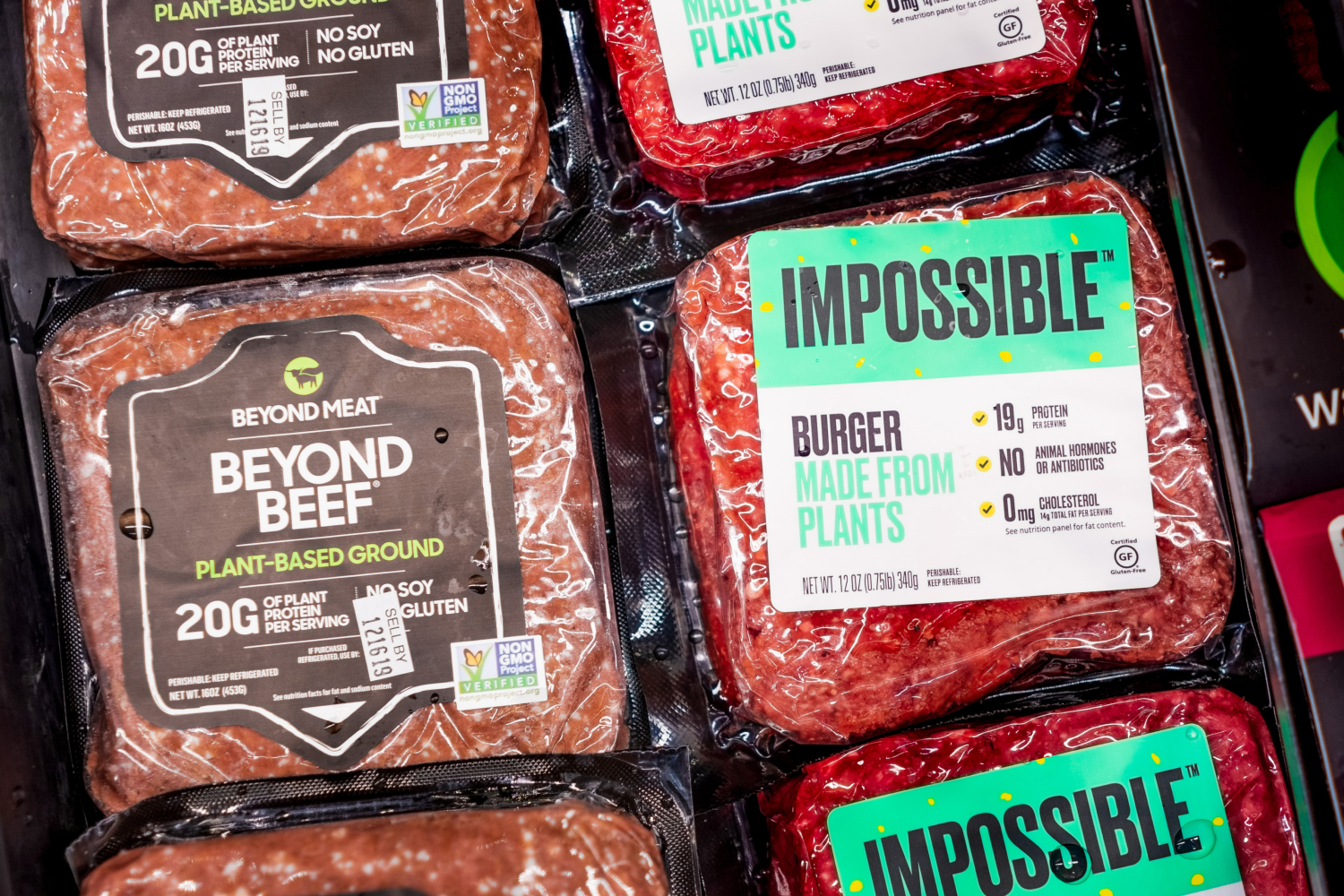
I didn’t have a good answer, so I decided to find out. I compared the nutrition labels of five of the most widely available plant-based burgers—the kind that try to mimic meat, not the ones made of lentils. I also dug into their ingredients lists, and chatted with an expert to get more insights on the “chemical” question. Here goes:
So what exactly are these burgers?
Popular supermarket faux meat patties are pretty much all composed of some sort of vegetable protein—soy, pea, wheat gluten—along with water, oil, and flavorings. The patties also aren’t necessarily vegan; some, like MorningStar Farms Grillers, include animal products like egg whites.
The most common chemical additives in plant-based patties are thickening agents. These include things like xanthan gum and methylcellulose (which happens to be a laxative but doesn’t act as such in your burger). The current crop of meat subs also have ingredients that help them look, taste, and act like meat in the pan or on the grill. Impossible, for instance, invented a genetically engineered fermented soy-based substance called soy leghemoglobin, which it dubbed “heme,” that gives its grub an uncannily meatlike bloody quality. “Heme” required FDA approval, so it had to be tested on rats—though the company no longer tests on animals.
And what about nutrition?
Let’s face it: Regardless of whether it’s made of beef or plants, a burger isn’t going to be great for you. That said, the plant-based patties came out ahead in a few ways—but sodium isn’t one of them. Four of the five burgers I looked at hovered near 400 mg of sodium, or almost one-sixth of the recommended daily allowance of 2,300 mg. For reference, ⅛ teaspoon of salt (what cooks call a “pinch”) has 300 mg, and a cup of Amy’s Organic lentil soup has 710 mg. Meat actually has naturally occurring sodium: A quarter-pound of ground beef has 62 mg, and restaurants and home cooks often add more to enhance the flavor.
The faux burgers beat their beefy counterparts in terms of fat, cholesterol, and fiber. A quarter-pound of 80/20 ground beef has 22 grams of fat—around one-third of your RDA if you’re eating 2,200 calories a day—and 77 mg of cholesterol. None of the plant-based burgers have any cholesterol, and they all had less fat than beef. There was about the same amount of protein across the burger board, and while beef contains no fiber, the plant-based patties do: Each had at least 2 g, which is the amount in a slice of multigrain bread.
To understand what that all means for your body, Faraz Harsini, senior scientist for cultivated meat at the Good Food Institute, points to a 2020 study published in the American Journal of Clinical Nutrition called SWAP-MEAT (Study With Appetizing Plant Food-Meat Eating Alternatives Trial). In the trial, half the participants ate two servings of meat each day for eight weeks and the other half ate two servings of Beyond. Results showed that “the plant products improved several cardiovascular disease risk factors,” and that there were no adverse effects.
The upshot?
“Everything is made of chemicals,” Harsini says. “We think ‘natural’ means good and ‘synthetic’ means bad, but just because something is synthetic doesn’t make it inherently bad for you.” Too much of any processed, salt-and-fat-laden umami indulgence, though, isn’t a great idea. In fact, a recent analysis confirms the relatively obvious: that downing tons of any ultra-processed food is no good for your health. Beyond Meat is even rolling out a new recipe in the spring with less salt and a shorter ingredients list.
So I’ll be reserving my consumption for special occasions, and toasting my Earth-friendly indulgence with an expertly made craft cocktail. “The moment you decide to have fast food, you’re not eating healthy anyway,” Harsini concludes. “So eat plants as much as possible, and if you want to cheat, eat Beyond or Impossible.”