
Confession time: There’s something in my Amazon cart right now. My husband and I have been stalled on a couple small home-improvement projects for months. Does laziness play into our lack of progress? Sure. But the real reason is that we don’t have the right tool for the job.
We’ve had our eye on what we need (an oscillating tool, if you must know) for a while now, but haven’t pulled the trigger. We can live with these tasks languishing a little—though chiseling out and replacing a couple broken floor tiles would be nice, because I keep smacking my toes. But also: Who’s out there shopping in this economy?!
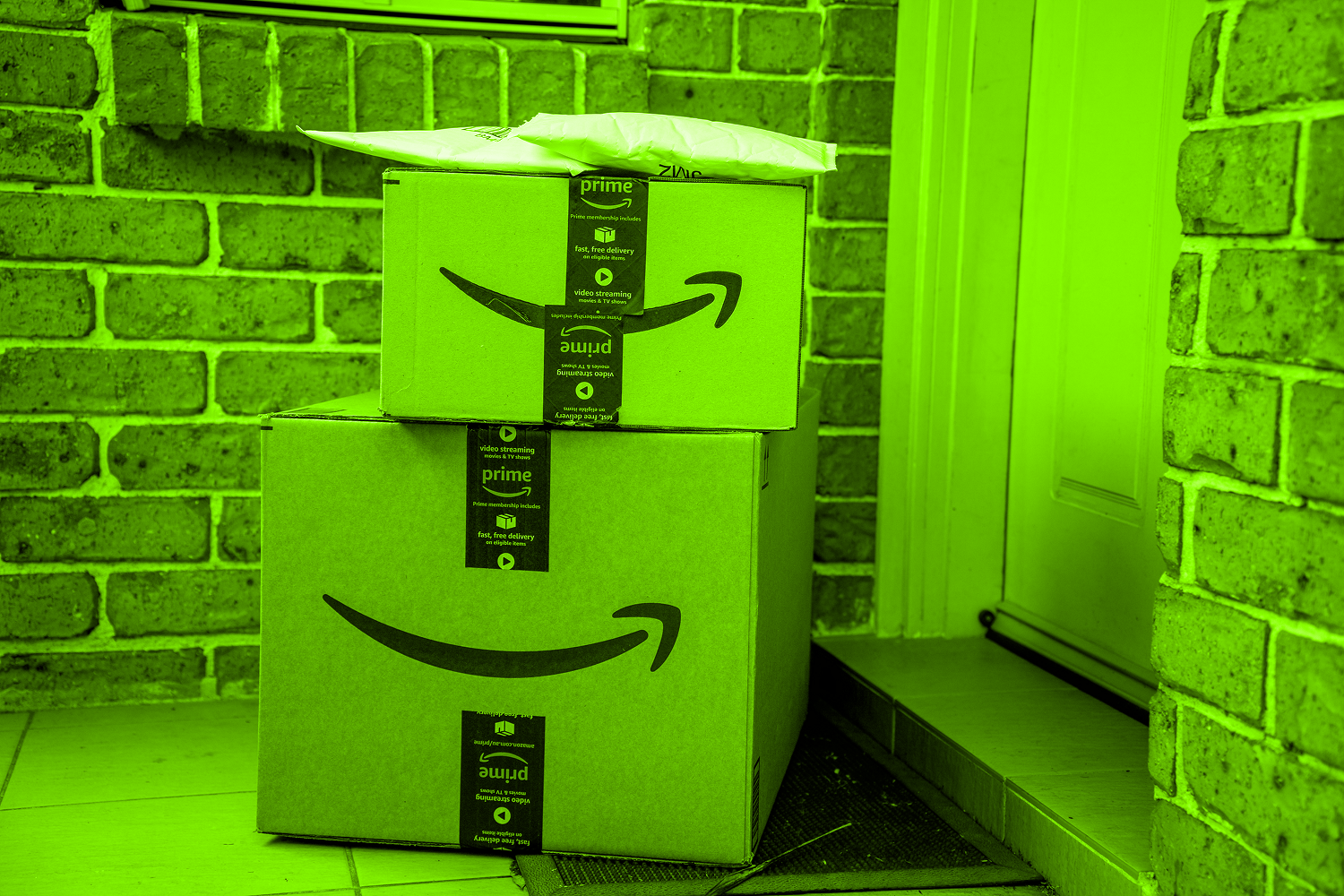
Except, of course, when there’s a sale. And this week is the sale of the season: Amazon Prime Day runs through Friday. I feel like a climate traitor even considering hitting the “buy now” button, but, at the same time, who am I to demonize a good deal when times are tight?
Here at one5c we try to avoid Amazon whenever it’s reasonable to do so. When companies featured in our product reviews run their own online shops, we link to their sites instead of to the platform that’s become the poster child for overconsumption. When we recommend books, we send readers to bookshop.org or a secondhand purveyor. When we spotlight an ingredient in a recipe, we avoid Whole Foods. You get the idea.
We make this a priority because we see it as our responsibility to help you all ensure your dollars aren’t unnecessarily funding any climate harm. Even without Bezos’s personal environmental sins, Amazon’s got quite the rap sheet. It’s one of the major engines fueling convenience culture—and the extraction and waste that comes with it. It's donated to PACs and candidates who obstruct climate policy. And, despite its 2019 net-zero pledge, it’s taken part in enough questionable math when tallying its emissions that even its employees are raising their eyebrows. That’s only the greenhouse-gas part of the story.
I don’t want a hall pass to buy a dozen Labubus; I want to not feel like shit for getting a good price on something I actually need.
The word “unnecessarily” is doing a lot of work in that last paragraph, because necessity takes on different meanings for different people. In some rural parts of the country, for example, Amazon or a big-box store like Walmart might be the most reliable or affordable place for people to get their basic needs. But when the cost of everything seems to be inching up, the necessity of saving a few bucks becomes more urgent for a lot of us.
At the same time, though, sales can do funny things to our brains. When we see a good deal, our pleasure centers light up and we get a rush of dopamine that makes us feel excited and, importantly, more impulsive. Retailers—not just Amazon, though they are particularly savvy in this regard—know this and flood us with signals to buy. Flash sales, like the ones we see on Prime Day, create urgency that nudges our doped-up gray matter to act quickly or risk losing out on the rush.
One datapoint speaks volumes here: Online sales are projected to jump 28% during Prime Day compared to last year—the sale is also a day longer—but our habits are far from limited to discount season. The average American made 73 (!) Amazon purchases in 2024 and spent more than $2,800. It’s all too easy, too cheap. Think about it: When was the last time you saw an Amazon product page without a strikethrough on the price touting a price drop? Such baked-in tactics make us think we’re scoring a sweet deal when the price is probably just OK.
All this conspires to make conscious consumption way (way) harder than it should be. Still, I struggle to find the middle ground. I personally have a tendency to over-correct and swear off ills entirely, because opening the dam even a little bit feels like inviting a flood of unnecessary purchases. Even the concept of a cheat day—which Joe loves for satisfying the occasional burger craving—doesn’t feel quite right in this case. I don’t want a hall pass to buy a dozen Labubus; I want to not feel like shit for getting a good price on something I actually need.
I’m not alone here. I’ve read dozens of Reddit threads full of anec-data about folks in the same spiral. It’s difficult to find actual hard numbers on how common these emotions are, but one small-ish survey found that 30% of shoppers feel guilty buying from Amazon. Maybe, though, my compatriots and I are beating ourselves up too much for big, systemic things that are beyond our control, and we should instead focus more on what we can change. For instance, the shipping options we select, or how much—and how often—we buy in the first place.
Or perhaps I'll overthink this just long enough to miss the sale—and the self-inflicted guilt trip—and save the oscillating tool for another day. It’ll probably be fine, at least until I stub my toe on a busted tile. Again.